


Resource calendar (or project management calendar, or project planning calendar, resource planning software) allows you to plan and manage and allocate resources more effectively and efficiently – especially if Microsoft Excel had a leading role in your company.
Often a part of a resource management tool, a resource calendar is your go-to view while planning projects, assigning bookings, and managing your teams. What follows is a resource calendar breakdown to give you a glimpse of essential features and why it’s worth using such a calendar in your daily work as a project manager.
What will you get with this article:
How project management calendars solve challenges
Few words about resource calendar, team scheduling, team time tracking, and leave management in 1 tool
The influence of resource planning software on project management
The meaning and role of resource calendars
Key Benefits of Resource Calendars in Project Management
Solving Project Management Challenges: Project management calendars address numerous challenges by providing a structured approach to planning and resource allocation. They facilitate the synchronization of team efforts, ensuring that resources are utilized optimally and project milestones are met timely.
Comprehensive Resource Overview: Resource calendars offer a holistic view of resource allocation, including employee availability, capacity, workload, and utilization. This transparency helps in preventing overutilization or underutilization of resources, thereby maintaining a balanced workload across the team.
Integration with Other Tools: Modern resource calendars integrate seamlessly with resource management software and other project management and time-tracking tools, creating a unified platform for managing all aspects of a project. This integration enhances efficiency by reducing the need for manual data entry and enabling real-time updates.
What is a resource calendar?
A resource calendar (also known here and there as a project management calendar and project planning calendar) monitors the multitude of tasks, occurrences, and dates that takes or will take place during the project’s life cycle. Creating a resource calendar is essential for effective project management as it helps in planning and resource allocation from the outset of a project. It observes the individual employee’s – at least – availability, capacity, workload, and utilization.(Teamdeck) A resource calendar – as terms suggest – is a calendar for controlling, coordinating, and monitoring resources, including both employees and equipment. It gives project managers a fully transparent view of the entire team and all projects, which is a great way to help enterprises in scaling their businesses.
To be more strict, an overview of how resources (employees) are being utilized, which resources with particular skills are available, how long separated projects take time, and how many particular projects will cost. Project and resource calendars play distinct roles in managing project timelines and resource availability. A project calendar tracks progress and deadlines, while a resource calendar focuses on resource allocation and availability. It also helps with avoiding workload management challenges such as overutilization or underutilization. A resource calendar shows the availability of both human and nonhuman resources, including working hours and off days, to ensure efficient project planning.

What are the project managers’ features looking for in the resource calendar?
Availability / Leave management features – the amount of time for which you can book an employee
Customizable, easy-to-understand reports
Planned work – the time for which an employee is assigned to a project. Ideally, overall bookings for one person shouldn’t exceed their availability
Timesheets and employee time tracking – the time an employee has worked on a given assignment/project. Ideally, time entries shouldn’t exceed the bookings
Employee utilization analysis features
Workload management and its optimization
Project budgeting
Project controlling and planning
Integration’s ability
Advanced customizations
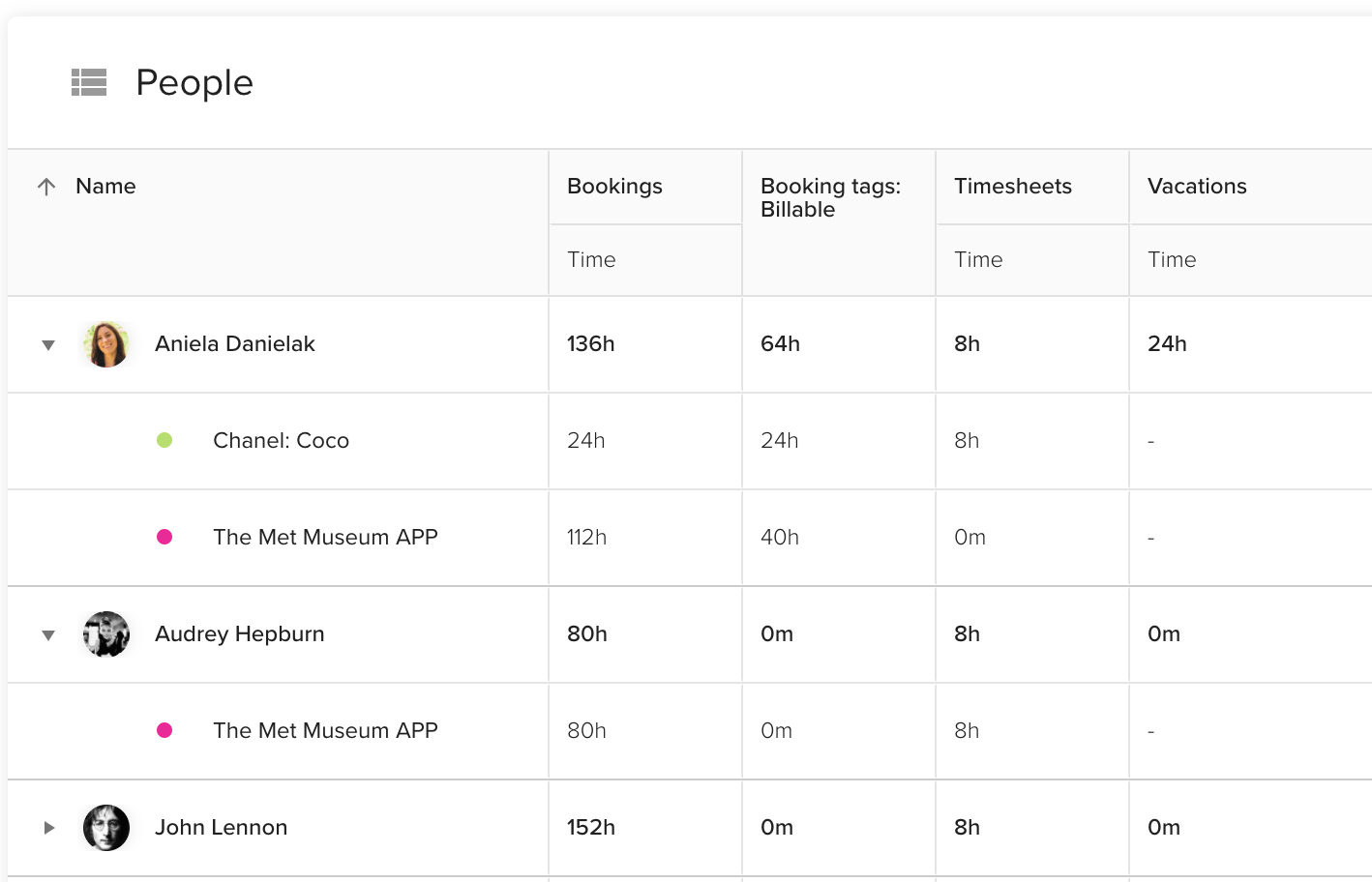
Team members’ bookings, timesheets, vacations overview
Leaves of absence – employee vacations, sick leaves, and other types of absences should be included in employees’ multiple calendars, so you can easily spot the time when a given team member is unavailable.
National holidays – similarly to leaves of absence, national holidays should be marked in your resource calendar as the time when resources are unavailable, so you can’t count them when planning a project.
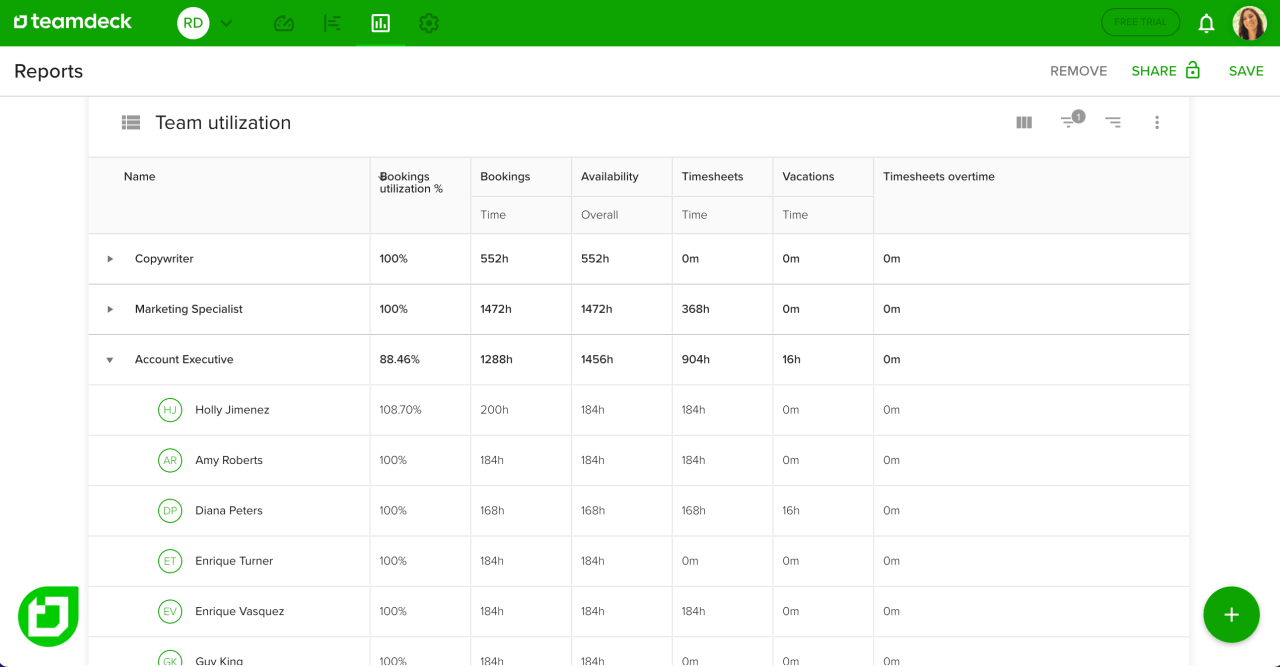
[Screen from Teamdeck – the resource and project management calendar]
The Role of a Resource Calendar in Project Management
Resource calendars play a pivotal role in managing complex projects by providing several advantages:
High-Level Resource Overview: They offer a snapshot of human resources availability, helping project managers plan effectively and allocate resources where needed.
Enhanced Understanding of Production Pipeline: By visualizing the project timeline and project resources, managers gain a better understanding of the company’s production capacity and can plan accordingly.
Optimized Workload Management: By tracking bookings and time entries, managers can quickly identify and address issues of overutilization or underutilization, ensuring a balanced distribution of tasks.

How does a resource calendar benefit your complex projects?
Project managers can benefit from using a resource calendar in many ways, e.g. by:
having a high-level overview of resource availability,
having a better understanding of the company’s production pipeline,
being able to plan resources more thoughtfully,
being able to adjust the team’s workload in case of underutilization or overutilization.
Managing resources effectively is crucial when handling multiple projects to ensure that workload is balanced and team members are not overburdened.
With a resource calendar, you can plan your team’s work more efficiently. By minding employees’ availability, their planned vacations, and national holidays, you reduce the risk of having too little workforce to complete the project.
Similarly, you can use a resource calendar to spot employees you need that are at the moment booked for another project. Knowing for how long they are unavailable, you can adjust your project’s timeline or negotiate with another PM over the resources you both need.
Another advantage of a resource calendar is a clear overview of employees’ workload. By monitoring bookings or time entries, you can quickly spot team members with too much or too little to do, so you can adjust their bookings accordingly. This helps the project team stay informed about their schedules and potential challenges, ultimately supporting better allocation of tasks and maintaining team morale.

The resource calendar, time tracking, timesheets, project planning, and workload management in the 1 place?
Let’s make the introduction. The Teamdeck is a SaaS resource management solution developed by a software house that works with NetFlix, Uber, or Universal. Previously the software was dedicated for their own purposes but after dozens of months, the product became commercialized. This is how – generally speaking – this resource calendar became part of the huge project management software market.
Teamdeck allows users to create their own resource calendar for better resource management, helping to prevent overbooking and enhance visibility into team workloads.
It helps each project manager and team member during the entire project, with resource planning, managing, and measuring performance.
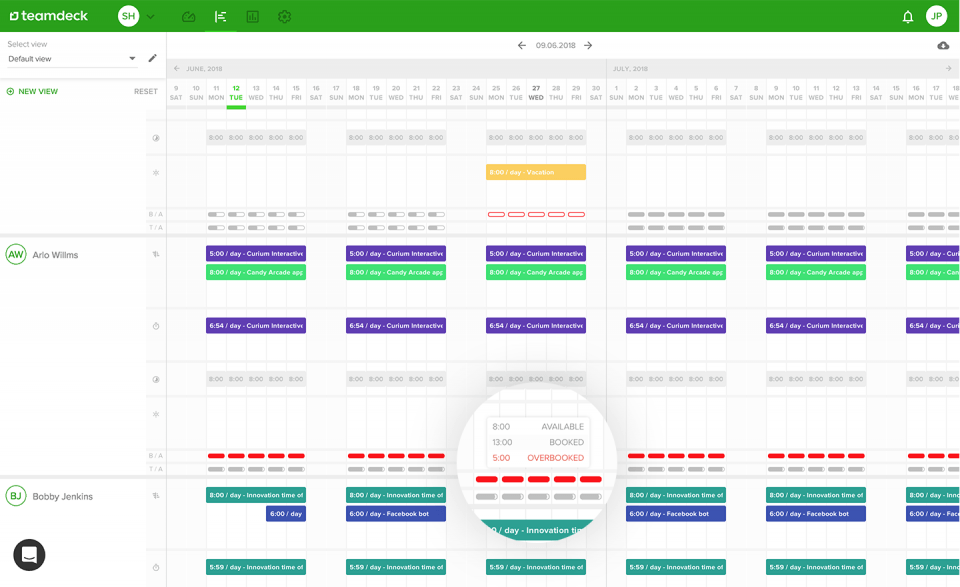
Teamdeck, you have access to your employees’ workload with a simple resources scheduler. The information available in Teamdeck include Bookings, Timesheets, Availability, and Vacations.
Additionally, we’ve included two more details that can help you with monitoring the workload:
Bookings vs Availability
Timesheets vs Availability
The bars show employees’ bookings or timesheets compared to their availability. It’s a quick and easy way to see if a team member is being under- or overutilized, making it easier for you to take action.
Detailed Overview of Resource Calendar Features
Availability and Leave Management
One of the fundamental features of a resource calendar is its ability to track employee availability and manage leave. This functionality is critical for ensuring that project managers have an accurate picture of who is available to work on a project at any given time.
In contrast, a project calendar is used to identify working days, shifts, and deadlines for tasks, providing a more static overview of the project timeline.
The calendar should include:
Planned Vacations: Employees’ scheduled time off needs to be accounted for to avoid scheduling conflicts.
Sick Leaves: Unplanned absences due to illness must be tracked and managed promptly.
National Holidays: Public holidays should be marked to ensure that they are considered when planning project timelines.
By having a detailed overview of these factors, project managers can avoid overbooking employees and ensure that projects are adequately staffed.
Customizable Reports
Customizable reports are another essential feature of a resource calendar. These reports provide insights into various aspects of resource management, such as:
Resource Allocation: Understanding how resources are distributed across different projects.
Project Progress: Tracking the status of ongoing projects and identifying any potential delays.
Team Performance: Analyzing the performance of individual team members and the team as a whole.
These reports can be tailored to meet the specific needs of the project manager, offering flexibility and detailed insights that aid in decision-making.
Planned Work Scheduling
Planned work scheduling ensures that each employee’s workload is manageable and does not exceed their availability. This feature helps in:
Balanced Workload Distribution: Preventing burnout by ensuring no single employee is overburdened with tasks.
Efficient Resource Utilization: Making sure that all team members are adequately utilized and no resources are left idle.
Effective scheduling is vital for maintaining high productivity levels and ensuring that projects are completed efficiently.
Timesheets and Time Tracking
Accurate time tracking is essential for understanding how much time employees spend on various tasks. This feature includes:
Timesheets: Employees can log the hours worked on specific projects, providing a detailed record of time spent.
Time Tracking: Real-time tracking of work hours to monitor productivity and ensure that time entries are accurate.
By comparing timesheets to planned bookings, project managers can identify discrepancies and make necessary adjustments to improve efficiency.
Employee Utilization Analysis
Employee utilization analysis helps project managers understand how effectively their team members are being used. This involves:
Utilization Rates: Calculating the percentage of time employees spend on billable tasks versus non-billable activities.
Capacity Planning: Determining the optimal workload for each team member to maximize productivity without causing burnout.
This analysis is crucial for making informed decisions about resource allocation and project planning.
Project Budgeting and Controlling
Effective project management requires careful budgeting and cost control. A resource calendar assists with:
Cost Estimation: Providing accurate estimates of project costs based on resource allocation and time spent.
Budget Tracking: Monitoring actual expenditures against the budget to ensure that projects stay on track financially.
Financial Reporting: Generating detailed financial reports to provide stakeholders with insights into project costs and profitability.
These features help project managers maintain financial discipline and ensure that projects are profitable.
Advanced Customizations
Advanced customization options make resource calendars adaptable to various organizational needs. These include:
Custom Views: Creating tailored calendar views that highlight specific teams, roles, or projects.
Filter Options: Filtering the calendar to display relevant information, such as the availability of specific skill sets.
Personalized Settings: Adjusting calendar settings to match individual preferences and workflow requirements.
Customization enhances the usability of the resource calendar, making it a versatile tool for different project management scenarios.

The Strategic Importance of Resource Calendars
Resource calendars play a strategic role in project management by providing a centralized platform for managing resources. This strategic importance is evident in several key areas:
Improved Resource Visibility
Resource calendars offer a high-level overview of resource availability and allocation. This visibility is crucial for:
Proactive Planning: Enabling project managers to plan ahead and allocate resources effectively. Team leaders play a crucial role in maintaining accurate resource calendars and ensuring effective resource allocation.
Conflict Resolution: Identifying and resolving scheduling conflicts before they impact project timelines.
Resource Optimization: Ensuring that all available resources are utilized efficiently to maximize productivity.
Enhanced Collaboration
A centralized resource calendar fosters better collaboration among team members and departments. Benefits include:
Coordinated Efforts: Facilitating the coordination of tasks and activities across different teams.
Transparent Communication: Providing a clear view of who is working on what, enhancing communication and reducing misunderstandings.
Shared Goals: Ensuring that all team members are aligned with the project’s objectives and timelines.
Scalability and Growth
Resource calendars support the scalability of organizations by providing tools to manage increasing complexity. This includes:
Scalable Resource Management: Adapting to the growing needs of the organization as it expands and takes on more projects.
Efficient Onboarding: Streamlining the onboarding process for new employees by providing clear visibility into team schedules and availability.
Adaptability: Adjusting to changing project requirements and resource availability in real-time.
Risk Management
Effective resource management is a critical component of risk management in project management. Resource calendars contribute by:
Identifying Risks: Highlighting potential resource-related risks, such as overbooking or skill shortages.
Mitigating Risks: Implementing strategies to mitigate these risks, such as reallocating resources or adjusting project timelines.
Contingency Planning: Developing contingency plans to address unforeseen resource challenges.
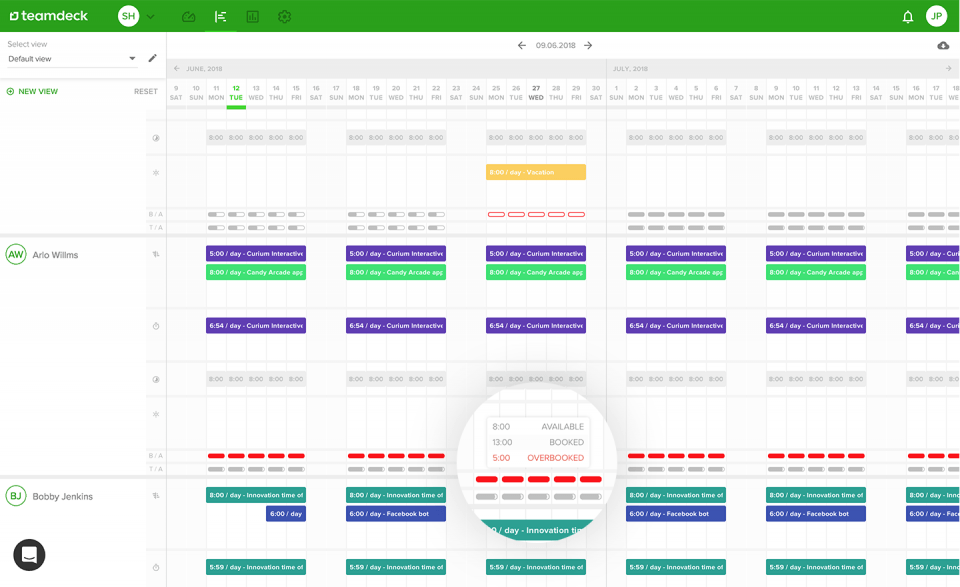
Availability bars in Teamdeck’s project planning calendar
To make Teamdeck more convenient to use, you can customize the view by selecting which rows you want to see.
Additionally, you can filter the view to display a specified list of employees, e.g. frontend developers or designers only. You can create your own views, so you can quickly get an overview of different teams.
Best Practices for Using a Resource Calendar
To maximize the benefits of a resource calendar, project managers should follow best practices in resource management. These include:
Regular Updates
Frequent Reviews: Regularly reviewing and updating the calendar to reflect changes in project timelines, resource availability, and team assignments. Regular updates to the resource calendar are essential during the project planning phase to ensure accurate scheduling and resource allocation.
Real-Time Adjustments: Making real-time adjustments to the calendar as new information becomes available, ensuring that it remains an accurate and reliable planning tool.
Comprehensive Training
Employee Training: Providing comprehensive training to employees on how to use the resource calendar effectively, ensuring that everyone is on the same page.
Ongoing Support: Offering ongoing support and resources to help employees navigate the tool and troubleshoot any issues that arise.
Clear Communication
Transparent Policies: Establishing clear policies and procedures for how the resource calendar should be used, ensuring consistency and accountability.
Open Dialogue: Encouraging open dialogue among team members to address any concerns or suggestions for improving the tool’s effectiveness.
Data-Driven Decision Making
Utilizing Insights: Leveraging the insights provided by the resource calendar to make data-driven decisions about resource allocation, project planning, and workload management.
Continuous Improvement: Using the data to identify areas for improvement and implement strategies to enhance overall project management processes.
Conclusion
In conclusion, a resource calendar is an indispensable tool for modern project management. It offers a comprehensive solution for managing resources, scheduling tasks, and optimizing workloads. By providing clear visibility into resource availability and utilization, a resource calendar enhances efficiency, collaboration, and decision-making. Tools like Teamdeck exemplify the benefits of advanced resource planning software, offering a robust platform that supports the successful execution of complex projects. By following best practices and leveraging the full potential of resource calendars, project managers can significantly improve their ability to deliver projects on time and within budget, ultimately contributing to the growth and success of their organizations.